Monday, 13 August 2012

Stairlifts Dunfermline – Stairlifts Fife


Click here to find new and reconditioned stairlifts in Dunfermline, Fife 

Castle Comfort Stairlifts offers top brand stairlifts, keen prices and fast installs for all those seeking stairlifts in Dunfermline, Fife. And all work comes with our no-quibble guarantees and famous customer service satisfaction.
Give us a call today on 0131 242 0046  If however, you are looking for fascinating facts about the area then feel free to read on.

Stairlifts Dunfermline


Dunfermline sits on the northern side of the Firth of Forth about 3 miles from the shore.  There has been a settlement here since Stone Age times.  However it didn’t come into its own until the Bronze Age evidence of which has been found in the area including a bronze axe, a gold torc in the parish churchyard.  Bonze Age burials were also found nearby containing a bronze dagger, armlets and a necklace.  Nowadays it is the second largest town in Fife after Kirkaldy some 15 miles to the east.

Dunfermline is home to almost 46,500 people of whom about 9,000 are retired – and not all of them are the proud owners of Bronze Age treasures.  Although some of them might feel as old as that!!!  We know that about 235 of Dunfermline’s population already own stairlifts, that’s about 2.6% of the retired population, the national average.  It’s a sad fact that a small percentage of us will need help getting up and down the stairs as we get older.

Fortunately here at Castle Comfort Stairlifts we can help.  We have a great supply of all the top brands of stairlifts at keen prices that we can install almost before you can say bronze dagger!  What’s more our guarantees are second to none and our 24/7 customer service makes sure you stay mobile.

If you need more information about our prices or our stairlifts, please take a look around our website and if you still have questions please give us a call on  0131 242 0046  

Royal connections
It is Dunfermline’s Royal connections that gained its first acknowledgement.  Malcolm III, King of Scotland married Saint Margaret in Dunfermline in the 11th century.  It was Margaret who established a new church in the town which was later given Abbey status under their son David I.

Copyright:Paul McIlroy


Malcolm and Margaret had six sons and two daughters.  Three of the sons became kings of Scotland: Edgar of Scotland, Alexander I and David I.  Their daughter Edith who was also known as Matilda married Henry I of England whilst their daughter Mary married Eustace III of Boulogne.

Saint Margaret
Margaret was an English princess, Margaret of Wessex.  She was the sister of King Edgar and had been born in exile in Hungary.  Having returned to England, Margaret fled to Scotland when the Normans invaded.

Source;Public Domain
Margaret was responsible for many charitable works including establishing a ferry across the Firth of Forth so that pilgrims could visit the Abbey.  This gave South Queensferry and North Queensferry their names.

Sainthood
Margaret was canonised by Pope Innocent IV in 1250.  Her canonisation recognised her holy disposition and her work with the church to bring about reform and her charity work.  She was interred at Dunfermline Abbey but after the reformation her remains were lost.  Her feast day is now 16 November, the day of her death.

Dunfermline Abbey
The Abbey was established by Saint Margaret although in her and her husband Malcolm’s reign it was a church dedicated to the Holy Trinity.  It was their son David I who established the building as a Benedictine monastery dedicated to the Holy Trinity and his mother.  Today it is a Church of Scotland parish church.

In David’s time its first Abbot was Geoffrey of Canterbury.

Edward I of England held court here at the very beginning of the 14th century.  The building was burned when he left although not all of it was destroyed.  During the Scottish reformation in the middle of the 16th century much of the building was further destroyed.  Fortunately much of its infrastructure including the refectory, rooms above the Gatehouse and the nave remained intact.  A decade later repairs were made to the naive and this part served as a parish church until 19th century.  It is now included as part of the new parish church.

Royal connections
Today Dunfermline Abbey is a very important Scottish cultural site.  It is recognised as the mausoleum of Scotland's Kings and Queens.  There are more Royal figures buried here with only the exception of Iona.  The list reads like a Who’s Who of Scottish royalty:

Buried at Dunfermline Abbey
·         St Margaret of Scotland and Malcolm III

·         Duncan II and his wife Ethelreda

·         Donald III

·         Edgar of Scotland

·         Alexander I and his wife Sybilla de Normandy

·         David I and his Queen Maud

·         Malcolm IV

·         Alexander III and his wife Margaret of England

·         Elizabeth de Burgh wife of Robert I

·         Robert the Bruce was buried here

·         Matlida, daughter of Robert I

·         Annabella Drummond, wife of Robert II and mother of James I

Source:Public Domain

·         Birthplace of Charles I


Abbot House
Abbott House is just to the north of Dunfermline Abbey and is a Grade A listed building.  The heart of the building is 16th century in origin and is now a heritage centre showing Scotland’s history from early times right through to the 19th century.
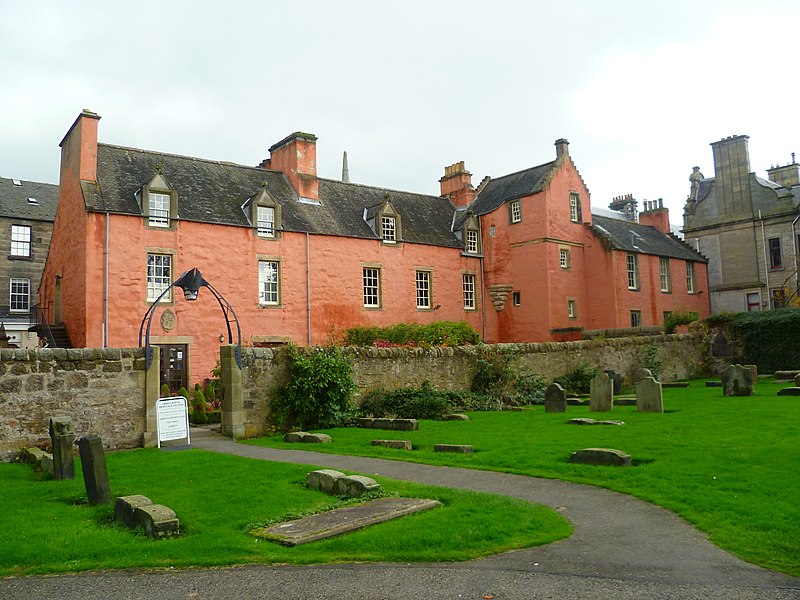
Source: Wikipedia 


It is the oldest surviving building in Dunfermline and represents architectural changes from 16th – 20th centuries.  You can still see frescoed wall paintings from the 16th century and a 14th century tracery window.  Various historic specimens have been found in the gardens from pottery shards to coins.

Pittencrieff House
Another Grade A listed building, Pittencrieff house is now a museum.  Originally built in the 17th century, two of its bedrooms now form two long galleries for museum and art space.  A huge repair and refurbishment programme was only completed two years ago even restoring its original lime wash exterior.

Source:Wikipedia


Pittencrief Park which belonged to the house was bought by philanthropist and son of Dunfermline, Andrew Carnegie.  He donated it to the people of Dunfermline to enjoy at the same time as he established the Carnegie Dunfermline Trust for the local people.

Source:Wikipedia User:Kilnburn

The weaver’s cottage where Carnegie was born before his family upped-sticks and emigrated to America is now a museum.  You can see regular weaving demonstrations here.

Famous sons and daughters
·         Carnegie introduces us to the rich and famous of Dunfermline.  Carnegie who was born to a weaver in the town and as already mentioned emigrated with his family to the US.  Carnegie made his money in steel and became a philanthropist in later life wanting to give his fortune back to encourage learning and education.  He donated $10 million to Scottish universities and more to a number of US universities as well as setting up trust funds and libraries

·         Ballet dancer Moira Shearer was born in Dunfermline.  She danced with Sadler’s Wells and became famous for her role in the film The Red Shoes

·         Fiction and Si-Fi author Iain Banks and Ian M Banks are one and the same.  He was born in Dunfermline and now lives in Queensferry.  Banks has published some 29 books and contributed to others

·         Another home-grown talent is the singer and actress Barbara Dickson


·         Ian Anderson of Jethro Tull was born in Dunfermline though he grew up in Blackpool

·         TV presenter Sheena McDonald, TV and film actor Kenneth Cranham, singer with the band Nazareth, Dan McCafferty, Stuart Adamson front man with Big Country

·         Retired footballer Alan Hay, another footballer the late Alex McIntosh, the late Harry Lind a Scottish International Rugby player


If you’ve had to hang up your dancing shoes, or throw off your football boots, we can still help with those stairs.  Give us a call today to learn about reconditioned stairlifts, grants and 0% finance options, so that you too can be the proud owner of a first class stairlift and swish to the top or bottom of the stairs.

Once everything is set up we can install your stairlift in less than half a day and you’ll be mobile again.  Don’t put it off, give us a call today on  0131 242 0046 .

Thursday, 9 August 2012

Funny Money and the Bank of England


What happened when Keith from Castle Comfort offered to help ease the financial burden of a stairlift by offering a £50 money back voucher for his customers? Read on to find out.


Many people looking for good value when shopping will be on the look out for those people and companies that look genuine and sound honest in their dealings, whether by phone or in person.

It is our right as consumers to choose who we do business with and most people can spot a rogue trader a mile off. Whether their stock is "knock off" or maybe they give some change back in counterfeit cash leaving the poor shopper out of pocket and ripped off.

According to the BBC 
In 2009, Bank of England figures revealed 566,000 counterfeit notes in the UK. Of these, 95% were twenty pound notes.
So approximately 1 in every 5000 notes is a possible forgery.

Well, what we didn't expect was an email from the Bank of England themselves saying that our novelty notes weren't a laugh at all but could pose the risk of being printed out and used by unscrupulous people as real cash in the shops.  Some people could have printed off hundreds of them and paid cash in fifties for something expensive and in fact the reason for the law being made was because that had actually happened. 

We can see their point, however everyone knows that people always prefer the genuine article than a fake one.

Official protocol from the Bank of England states that we had to remove all the novelty notes from our blog so I cannot show you a picture of one here on this page anymore.  To do so would risk us all doing a few years at Her Majesty's Pleasure for counterfeit note production!   However if you look at the amended and officially allowed £50 voucher above and imagine a picture of our own local Stairlift King (Keith) superimposed on it instead of the Queen you will have an idea of what our funny money looked like.

If you want a genuine no-nonsense stairlift quotation, with no funny business, and to also take advantage of a real £50 money back offer on your order, then speak to us for the real deal.
Just call 0800 007 6959 today. 


Kirkaldy – Stairlifts Fife


Click here to find new and reconditioned stairlifts in Kirkaldy, Fife


Castle Comfort Stairlifts offers top brand stairlifts, keen prices and fast installs for all those seeking stairlifts in  Kirkaldy, Fife . And all work comes with our no-quibble guarantees and famous customer service satisfaction.
Give us a call today on 0131 242 0046  If however, you are looking for fascinating facts about the area then feel free to read on.


Stairlifts Kirkaldy – Stairlifts Fife

Kirkaldy is the biggest town in Fife with a population of almost 50,000.  Of these about 9,500 are retired and about 245 own stairlifts.

It’s a sad state that sometimes as we get older mobility becomes a problem, but thanks to Castle Comfort Stair Lifts this doesn’t have to be a major problem.  We can supply a range of stairlifts to fit your needs so that you or your loved one living in the area can regain their independence and get up and down those stairs safely.

Our website is a comprehensive guide to the range of stairlifts we stock and prices.  So please have a look round and any questions, please give our local office a call on  0131 242 0046  .

Big names from Kirkaldy
Adam Smith - Kirkaldy’s most famous son is Adam Smith also known as the ‘father of modern economics and capitalism’ following the publication of his The Wealth of Nations’, acknowledged as a ‘great work’.   Smith is still thought of as one of the most influential thinkers in economics today.

Smith was born in Kirkaldy and was a bright scholar, leaving for Glasgow University to study moral philosophy when he was 14.  He won a Snell Exhibition given annually to a student of Glasgow University to study at Balliol College Oxford.  Smith went on to teach at Glasgow University.  He was described as a typical and rather eccentric absent-minded professor.

Robert Adam - the 18th century architect and interior designer was also born in Kirkaldy though he was brought up in nearby Edinburgh.   He eventually took over his father’s architecture business and made both his brothers partners.  They developed the ‘Adams style’ of neoclassical design which included decorative motifs from classical Rome, pilasters, painted ornaments i.e. swags and ribbons, pastel colour schemes.  Their first big job as a partnership was for Hopetoun House near Queensferry.


Sandford Fleming - founded ‘standard time’ was also born in Kirkaldy.  As a young man he emigrated to Canada where he worked as a surveyor.  In 1876 he proposed that standard time was adopted i.e. a local time for cities in the various time zones.  It wasn’t until some 50+ years later that towns around the world accepted this standard time.

Liberal MP David Steel, The Lord Steel of Aikwood - was born here too.  Steel was leader of the Liberal Party until its merger with the Social Democrats Party in 1988; he has served as an MP and an MP for Scottish parliament and since 1997 he has been a member of the House of Lords.

Gordon Brown - who succeeded Tony Blair, was the Labour Prime Minister until 2010 when the coalition government gained powers and David Cameron became Prime Minister.


Industry in Kirkaldy
The harbour at Kirkaldy in the 16th century ensured that it was an important trading post.  The main regions traded with included the ‘Low Countries’ i.e. Belgium, The Netherlands and parts of Northern France and Western Germany as well as Luxemburg; the Baltic Region including Scandinavia, Russia, Poland, Estonia, Latvia and Lithuania; and England.

Salt, coal mining, nail making and linen were the most prominent industries in the area.  Yarn for the linen was imported from Germany.  The production of linen later developed into floor cloth production and eventually to linoleum manufacturing.  Linoleum production became the town’s biggest industry in the mid 20th century which also grew the local population.

Now the industry in the town is mainly either retail or service industries but linoleum is still produced here – though the operation is much smaller than in its heyday.

In 2011 the harbour reopened to cargo ships allowing Carr’s Flour Mills to import wheat for flour under an agreement between their parent company, Forth Ports and Transport for Scotland.

Kirkaldy Bay
The small sandy cove of Kirkaldy Bay faces onto the Forth of Firth.

Source:Wikipedia

The Links Market
Every year for a week around Easter, Kirkaldy holds the Links market.  It is reputedly the longest street market in Europe at almost one mile along the Esplanade.  It has a number of attractions including ‘thrill rides’, roller coasters and sideshows.

This is the legacy of the weekly market that was held here in the 14th century which was probably more of a trade and farmer’s market than it is today.

A little local history
Ravenscraig Castle - this ruined castle can be found just outside Kirkaldy.  It was built by James II for his wife Mary of Gueldres and also as a defence for the Firth of Forth and to some extent the harbour at Kirkaldy.  The castle was finished after the death of James II and was indeed Mary’s home until her death.  James III ‘swapped’ it for Kirkwall Castle and the Earldom of Orkney.


Kirkaldy Museum and Art Gallery - this museum and gallery which is currently closed for refurbishment is all tied up with the floor cloth industry.  It was donated by John Nairn son of manufacturer Michael Nairn and opened by John Blyth another cloth manufacturer and grandfather of Michael Portillo.

Wikipedia Source:Kilnburn

It houses a permanent exhibition of the town’s industrial heritage, paintings of the Scottish Colourists and famous local pottery, Wemyss Ware.  All worth seeing when it reopens in Spring 2013.

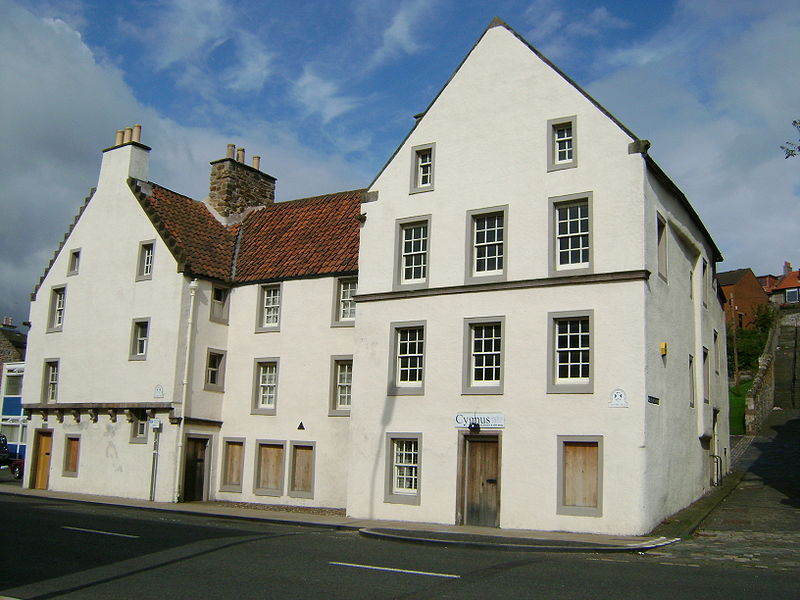
Sailor’s Walk - can be found on Kirkaldy’s High Street.  It is two 17th century houses with origins two centuries earlier.  These two houses were once four dwellings.

Wikipedia Source:user:kilnburn

Did you know?
Just a couple more famous folk with connections to Kirkaldy:
·         Actor Ewan McGregor studied drama at the Adam Smith College here
·         The Proclaimers also attended this college
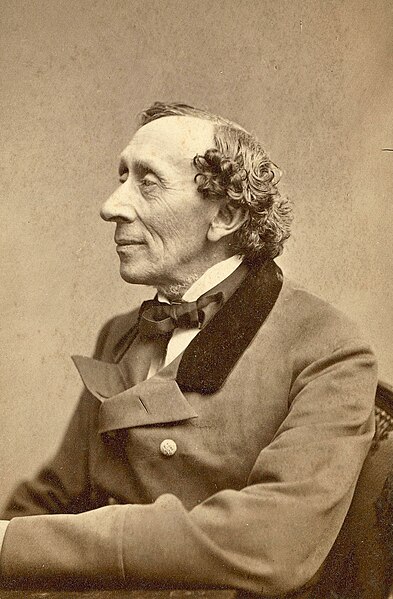
·         The Danish children’s author, Hans Christian Anderson visited Kirkaldy


·         Base guitarist with Coldplay, Guy Berryman was born in Kirkaldy
·         Richard Park was the headmaster on the BBC’s Fame Academy.  He is also Chief Exec at Global Radio and was born in Kirkaldy
·         Author of The 39 Steps John Buchan grew up here
·         Artist Jack Vettriano was born in Methil, just 8 miles from Kirkaldy
·         Professional golfer Peter Whiteford is from Kirkaldy as is professional ice hockey player, Adam Walker
·         Footballer Colin Cameron currently playing for Cowdenbeath is from here
·         Kirkaldy is also home town to darts champion Jocky Wilson

If you don’t have the agility of the sportsmen of the area anymore, don’t forget that Castle Comfort Stairlifts can help.

Give us a bell if you want cost effective suggestions for purchasing your stairlift from our own brand to reconditioned chairs.  Don’t forget the possibility of a grant or 0% finance and of course our generous £50 off voucher which you’ll find at the top of this page that can be used towards purchase.  You’re nearly there – just give us a call to finalise things on  0131 242 0046  .

Tuesday, 7 August 2012

Stairlifts Clydebank -Stairlifts West Dunbartonshire


Click here to find new and reconditioned stairlifts in Clydebank,West Dunbartonshire  

Castle Comfort Stairlifts offers top brand stairlifts, keen prices and fast installs for all those seeking stairlifts in Clydebank, West Dunbartonshire. And all work comes with our no-quibble guarantees and famous customer service satisfaction.
Give us a call today on 0141 278 329  If however, you are looking for fascinating facts about the area then feel free to read on.


Stairlifts Clydebank

Clydebank as its name suggests can be found on the northern bank of the River Clyde.  It is part of Greater Glasgow and less than 10 miles from both Erskine and Renfrew.  In fact Clydebank is in what was once known as the ancient kingdom of Strathclyde.

Castle Comfort Stairlifts, Scotland
Speaking of artefacts, are you part of the 19.4% of Clydebank’s population who have reached retirement age?  Fortunately only a small percent of you will lose your mobility and need the help of Castle Comfort Stair Lifts.  We know that there are already around 228 people in Clydebank who own stairlifts to help them get up and down the stairs.

If gives back some independence and allows those who suffer this way a safe means of transport on the stairs.  We’ve been supplying stairlifts for about 15 years now and know from personal experience what a difficult time it is when a stairlift is necessary.

Our local Glasgow office can advise you or your loved one in the area about the best stairlift for them and their home.  We can also help with advice on funding your purchase from reconditioned versions to 0% finance options and grants advice and help too.

If you’d like to know more, please give our local office a call on 0141 278 329

Clydebank’s history
So with a geographical hold on Clydebank, what else is known about this town?  Well the Roman Antoine Wall which crosses Scotland in much the same way as Hadrian’s Wall crosses northern England, runs through part of the town.  This wall denoted the borders of the Roman Empire in the north and is now a World Heritage Site.

From rural and agricultural beginnings Clydebank grew in the industrial revolution of the 18 – 1900s as shipbuilding became big along the Clyde.  In fact the town got its name from the shipyard of the same name.  At first workers were ferried to the shipyards by paddle steamers and then tenement buildings were built to house the workers.  Consequently Clydebank was born.  Next came the railways and then the Singer Manufacturing Company arrived building a large sewing machine factory in the town.

The John Brown Shipbuilding Company was the largest and was responsible for building many well-known ships including RMS Lusitania and the Queen ships, Mary, Elizabeth and the QE2.  The company became part of the Upper Clyde Shipbuilders and closed in the year 2000.
Source:Wikipedia

Did you know?
That Clydebank had a Blitz?  In 1941 Luftwaffe bombers targeted Clydebank and the surrounding area.  The town and the shipyards took some serious hits as did an armaments factory, an oil depot and the Sewing Machine factory.  The raid lasted for two days in March and during that time more than 500 civilians were killed and more than 600 seriously injured


The Titan Crane which stands where the shipbuilding company once was has achieved Grade A historical building status.  It has been refurbished and visitors can look around this cantilever crane over long weekends during the summer months.  It is one of 4 left on the banks of the Clyde; the others are at Stobcross, Scotstoun and Greenock

Source:Stephen Sweeney

Clydebank’s shopping centre sits on both banks of the Forth and Clyde canal.  The canal and banks have been upgraded and are now user-friendly and incorporate many projects from local schools like the Goldfish Story.  There are also the Bankies Benches which are heated granite seating to allow their use all year round.  During this refurb in 2008 a competition was introduced for a pedestrian bridge design to link the two parts of the shopping centre.  The award winning canopy bridge – the ‘swan in flight’ - which now allows this access was designed by local architects RMJM

Source:Dave Souza
The Forth and Clyde Canal was once home to monster goldfish.  The Singer factory on the canal’s banks used water from the canal to cool their machinery and the water pumped back in was hot.  Stories say you could see steam coming off the canal.  Goldfish lived in the canal – there are various stories about where they came from – and because of the temperature grew large.  Some were said to be more than a foot long – or is that just a fisherman’s tale?

Dragon’s Den’s Duncan Bannantyne was born in Clydebank.  Bannantyne is an entrepreneur and investor who owns several health clubs, spas and hotels

Source: Wikipedia

Footballer Alan Gow comes from Clydebank.  Gow started his career playing for the ill-fated Clydebank FC who went into administration in 2002 (and have since reformed).  He’s also played for Falkirk FC, Notts County and Glasgow Rangers


Actor James Cosmo was also born in Clydebank.  He’s appeared in many films including Braveheart, Highlander, The Adventures of Greyfriars Bobby, the Chronicles of Narnia and The Lion, The Witch and The Wardrobe.  He is a fan of Glasgow Rangers


·         Lead singer with Wet, Wet, Wet, Marti Pellow is from Clydebank

Source:Wikipedia
·         New York Times Pulitzer Prize winning journalist and editor James Reston came from Clydebank.  Reston’s family emigrated to the USA in the 1920’s.  During his career Reston interview John F Kennedy, Nikita Khrushchev and was a good friend of Henry Kissinger

·         Gavin Millar made a name for himself as a film critic and later directing films and TV films such as Pat and Margaret, Foyle’s War and Housewife, 49

Getting up and down those stairs
Remember if stairs are a problem for you, we can help.  We have a wide range of stairlifts on offer from UK manufacturers and we even have our own brand now.  Take a look at what previous customers have said about us and our stairlifts and see how they compare.  Prices are clearly listed on site so that you know exactly what it will cost you.

Remember we are only a phone call away even after your stairlift is installed.  Speaking of installation once everything is agreed and in place, we can get your chairlift installed in less than half a day.  With a 24/7 after sales service too, we make sure you’re never stranded at the top or the bottom.

Do a little online browsing at our stairlifts today and then call our office to place your order or ask questions on 0141 278 329 .

Sunday, 5 August 2012

Stairlifts Greenock – Stairlifts Inverclyde, Strathclyde

 
Click here to find new and reconditioned stairlifts in Greenock, Strathclyde


Castle Comfort Stairlifts offers top brand stairlifts, keen prices and fast installs for all those seeking stairlifts in Inverclyde, Strathclyde . And all work comes with our no-quibble guarantees and famous customer service satisfaction.

Give us a call today on  0141 278 3929  If however, you are looking for fascinating facts about the area then feel free to read on.


Stairlifts Greenock – Stairlifts Strathclyde

Greenock can be found on the south bank of the River Clyde just as it joins the Firth of Clyde.  The Firth of Clyde is a vast stretch of coastal water sheltered from the Atlantic Ocean by a peninsula of land known as Kintyre.  At the entrance to the Firth it is 26 miles wide.  As Greenock sits on the river bank, it is no surprise that its history and industry has long been linked with the water. For yacht charters on the Clyde visit http://www.clydeyachts.com where Colin will provide you with a great selection of boats.

Source:Wikimedia Commons


The Port of Greenock timeline
·         In the 1500’s Greenock was a fishing port

·         By the late 1600’s shipbuilding was already important here.  Through the following centuries some of the biggest shipbuilding and ship engine manufacturing firms were established here

·         It was the departure port for Scotland’s second fleet attempting colonisation of the New World

·         The first dock was built in 1711

·         Flourished through trade with the Americas particularly sugar from the Caribbean

Source:Wikimedia Commons


·         Further north of Greenock is the Tail of the Bank, a place of anchorage in the Firth of Clyde.  This was home to the Home Fleet for part of World War II and also the Free French Navy

·         This area was also used in the 20th century as the embarkation point for those emigrating to Canada and the USA

·         The shipbuilding industry died in the late 20th century.  All that remains now is some repair work at Garval and Inchgreen dry docks.  The last shipbuilders Fergusons, continue shipbuilding at nearby Port Glasgow

·         Greenock is now predominantly a container freight port and a cruise liner terminal operating from Prince’s Pier

·         Greenock also offers support services to the Royal Navy

·         The Navy’s submarine base is at nearby Glen Loch

Source:Wikimedia Commons


Castle Comfort Stairlifts and Greenock
Our timeline isn’t nearly as long as the Port of Greenock’s.  Our family business was started about 15 years ago after our own family had found ourselves in the position of a loved one needing a stairlift or some means of transport up and down the stairs.  We wanted to make sure that the process was easier for others.

So now we are able to offer you stairlifts from all of the UK’s manufacturers including our own brand as well as reconditioned ones.  No matter what you need we have a solution from perch lifts for those of you who cannot bend your knees to curved or straight stairlifts depending on your staircase.  We even have stairlifts that are wider and take more weight so no one needs worry.

Once you have looked at the range and made your decision we can actually arrange for the stairlift to be fitted in your home in less than half a day.  We offer a 24/7 after sales service so that you don’t need to worry about being out of action or stranded – we are just a phone call away on  0141 278 3929.

Industry in Greenock
As you can tell from the port of Greenock’s timeline, the water has influenced industry in the area.  Initially the industry was fishing but soon became boatbuilding and then trade with foreign places.

Both shipbuilding and sugar imports had a big effect on Greenock.  Shipbuilding employed thousands of people in the 19th and 20th centuries.  With the demise of the industry, many jobs were lost and unemployment soared.

Sugar refineries grew up all around the port of Greenock the first in 1765!  Around 400 ships a year brought sugar – and tobacco – to Greenock by the end of the 19th century.  There were 14 sugar refineries in Greenock plus a sugar beet factory.  It was the home of sugar refining for the famous Tate and Lyle.  When they closed in 1997 it also closed the town’s 150 year link with sugar importing and refining.

The sugar warehouse at James Watt Dock was declared an A listed building with its unusual colonnade which gave unloading protection from the weather.  The building stood empty for many years but is now being carefully refurbished into apartments.

Source:Wikimedia Commons


From the 1950’s electronic companies moved into Greenock making this the main source of industry in the area.  These companies have also moved out to other areas where production is cheaper and now the town is home to several call centres.

Greenock’s rich and famous
The engineer James Watt is Greenock’s most famous son.  He improved the steam engine making it more efficient with a condenser.  He also created horsepower as a measurement of energy.  The watt, a unit of power or energy was named after him.  In his home town he is well remembered by the local James Watt Memorial College and the library which is ‘instituted in his memory’.

The love of Robert Burns’ life, Mary Campbell came to visit her sick brother in Greenock.  She nursed him once he contracted Typhus which she unfortunately caught too.  She was buried in the Old Kirk graveyard.  Her grave was marked by a monument with an inscription later installed at the public’s request.  When the Old Kirk site needed to expand in the 1920’s the monument was moved to its present location in Greenock Cemetery.

Political novelist John Galt who commented on the industrial revolution lived in Greenock periodically and featured the town in his novels.  He travelled a lot and worked for the Canada Company, founding a town near Toronto for the company’s headquarters, called Guelph.  Today this town is renowned for its high living standards, its low unemployment and crime rates.  One of Galt’s sons became one of the Founding Fathers of Canada.  Galt is buried at the Inverkip Street Cemetery in Greenock.  There is a memorial fountain in his honour in the town.

Famous US Comedian and TV host Jay Leno’s mother, Catherine Muir was born in Greenock but emigrated to America when still young.  American actress Julianne More has a similar background.  Her mother Anne Love emigrated from Greenock too.

Actor Richard Wilson best known for his role as Victor Meldrew in the TV series One Foot in the Grave was born and brought up in Greenock.  Actor Martin Compston got his acting break with Ken Loach in his film Sweet Sixteen.


Chick Murray, the controversial comedian was also from Greenock.  Composers Hamish MacCunn and William Wallace were both from here as were Bill Bryden a playwright and theatre director, Neil Paterson who won awards for his screenplay for Room at the Top and TV screen writer Peter McDougall.

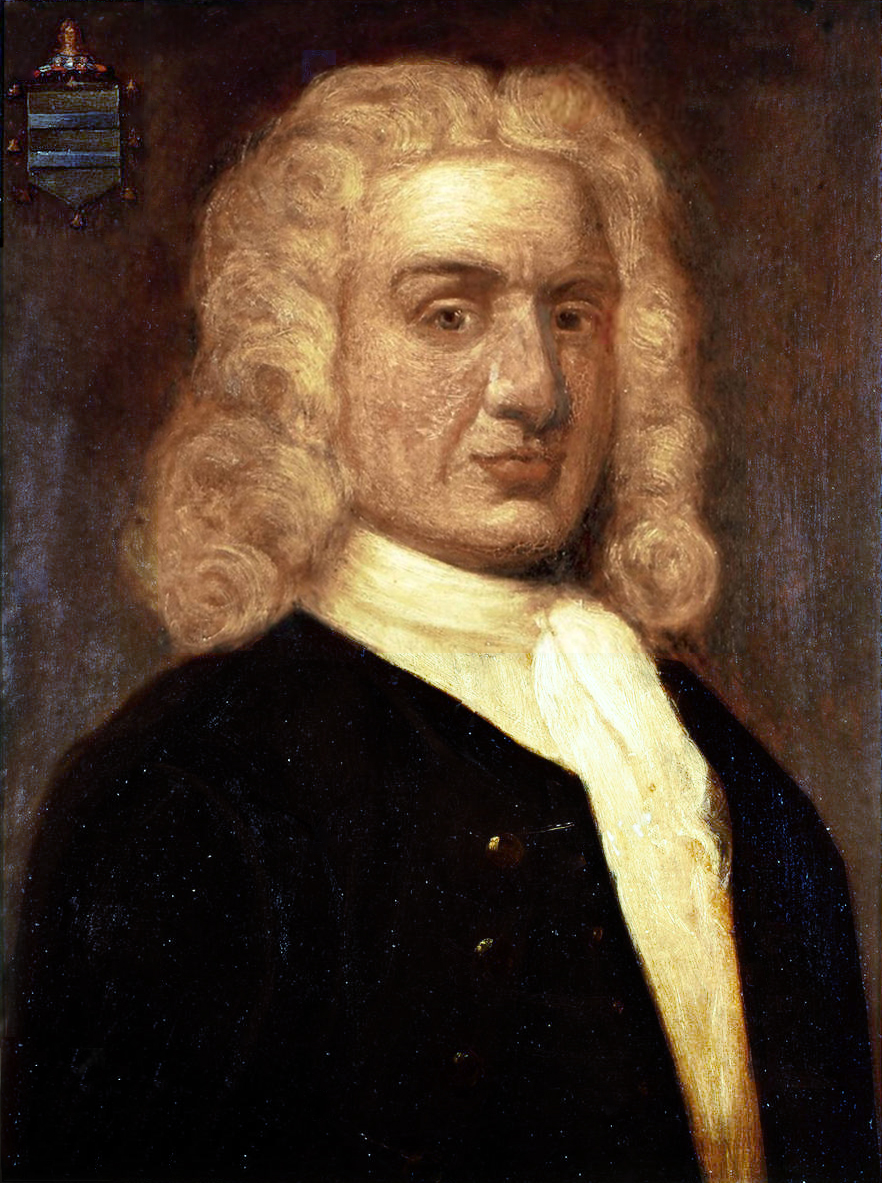
Two infamous characters: the pirate William Kidd claimed to be from Greenock before his trial but he was actually born in Dundee.  The Libyan officer imprisoned for the Lockerbie bombing was held at Greenock Prison until his release in 2009.

Source:Wikimedia Commons


You might not be famous, but if you or a loved one in the Greenock area needs a stairlift, we can help.  We can even advice on purchase options from 0% finance to grants.  Get in touch with us today to make your life easier on  0141 278 3929  .

Monday, 30 July 2012

Stairlifts Paisley – Stairlifts Renfrewshire

 
Click here to find new and reconditioned stairlifts in Paisley, Renfrewshire


Castle Comfort Stairlifts offers top brand stairlifts, keen prices and fast installs for all those seeking stairlifts in  Renfrewshire and Strathclyde . And all work comes with our no-quibble guarantees and famous customer service satisfaction.
Give us a call today on 0141 278 3929  If however, you are looking for fascinating facts about the area then feel free to read on.


Stairlifts Paisley – Stairlifts Renfrewshire

As many as 400 people in Paisley already own stairlifts.  This isn’t out of the ordinary as it’s roughly 2.6 of the retired population here which is the national average.  We keep count as well and you can see our constantly updated counter here.

The truth is that for that a small percentage of us need some assistance with stairs as we age.  A stairlift is a safe way to regain access to your whole home and can make a great difference to your life.

Here at Castle Comfort Stair Lifts we like to help as many people as possible restore this mobility to their lives.  Consequently we have a good range of stairlifts supplied by all of the UK’s manufacturers plus our own brand.  Take a look here if you want to compare them.  We can advise you on which stairlift is best for you and you can see the prices online too.

So take a look around our site but if you still have questions, please telephone our local office so that we can offer your our expertise on all things stairlifts.  Just call  0141 278 3929 .

It’s all about Paisley
Paisley is famous for its paisley pattern and Paisley shawls, for its architecture, for its links to the Royal families of Scotland and England and it witches!

Paisley pattern and shawls
Where to begin?  Let’s start with the Paisley pattern and shawls.  The teardrop design of the traditional Paisley pattern originates in Persia.  It is still used in Iran, Uzbekistan and India.  In fact it was the amazing Kashmiri shawls brought back by soldiers and imported by the East India Company that inspired its recreation in Europe.

Source:Wikimedia Commons


Paisley became the British home of production and gave the pattern its modern name.  Hand weavers in Paisley in the 17th century and later using mechanical Jacquard looms were able to incorporate 5 colours at first.  This was more than other weavers who could only use two.  Later this increased to 15 colours or threads.  This was still less then the colourful originals from India but more than other producers could manage.  Famously the pattern was made into Paisley shawls like the originals from Kashmir.

By the 19th century Paisley had a thriving textile industry and in the next century big business in producing threads for sewing.

The textile history has left Paisley with quite some legacy.  First and foremost the named pattern, some great Victorian architecture in the shape of mill buildings and weaver’s cottages and street names.  You’ll find streets by the names Cotton Street, Thread Street, Shuttle Street, Silk Street, Mill Street and more in Paisley.

You can see a collection of Paisley shawls at Paisley’s Museum.

Architecture - Paisley Abbey
This abbey was first built as a priory or monastery in the 12th century at the direction of Walter FitzAlan, the first High Steward of Scotland.  It was on the site of an earlier church founded by St Mirin.  Thirteen monks came from Much Wenlock in Shropshire to set up the priory.  A century later, the priory was upgraded to an Abbey answerable only to the Pope.


It became a seat of learning too.  William Wallace, a knight and landowner, who was born nearby was educated here as a boy.

The Abbey has had a chequered history.  It was burnt down in 1307 and later rebuilt.  It suffered more problems including another fire during the 15th and 16th centuries and was restored during the 19th and early 20th century.  It is now a Church of Scotland parish church.

The Abbey has one of the finest organs in Scotland built by the French organ builder Cavaillé Coll.

Paisley’s listed buildings
·         Anchor Mills – a Grade A listed building a valuable part of the textile history of the area

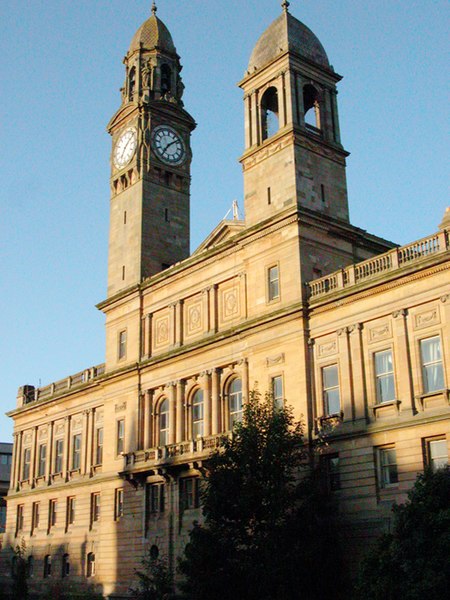
·         George A Clark Town Hall, a neo classical building which was funded by the Coats family

Source:Wikimedia Commons


·         The Museum, Art Gallery and Library – the museum was built in 1871 by Sir Peter Coats part of the thread producing family.  It was designed by John Honeyman a Glasgow architect

·         Coasts Observatory – the observatory was opened in 1831 by Thomas Coats.  You can still visit this working observatory which records weather and see how it works.  They also have a planetarium where you can see the night sky

The Russell Institute
This Grade A listed building was built during the early 20th century and in a typical Art Deco style.  It was built to commemorate two brothers, Thomas and Robert Russell by their sister Agnes.  The building has a number of bronze statues including the guardian angel above the door.  The building was used as a child welfare clinic and is still used as clinic today.

Sma’ Shot Cottages
The only surviving weaver’s cottage in Shuttle Street has been refurbished to its original state so that you can see just how the hand loom weavers lived and worked.  It was built in the 1740’s and has three rooms.  Records show that two of the rooms would be living quarters and the third room for the loom.

Behind this cottage are three more built a little later and which show how the weavers lived about 70 years later.

Royal links
The Royal Stewart line descended from Walter FitzAlan the first High Steward of Scotland.  Whilst Paisley was the religious home of the Stewarts, their family residence was a castle near Renfrew.  The connections remain firmly with Paisley though as all six High Stewards are buried at Paisley Abbey.

The Royal connection came when Marjorie Bruce daughter of Robert the Bruce married the 6th High Steward.  The first Stewart king was Walter and Marjorie’s son, Robert II.  Marjorie is also buried at Paisley Abbey.

The Paisley witches
In 1697 seven people from Paisley were found guilty of witchcraft.  Six of them were hanged at Gallow Green.  The seventh took his own life before this.  They were accused of witchcraft by a girl of 11 called Christian Shaw.  The girl accused the family maid of putting a curse on her after Christian saw her steel a glass of milk.  This was only 4 years after the Salem witch trials in America.

Who do you know from Paisley?
Paisley isn’t short of a famous person or two in many walks of life.  Here are just a few with strong connections to this town.

·         Andrew Neil, journalist, ex editor of the Times and TV presenter

·         Tom Conti, TV and film actor

·         Paolo Nutini, singer/songwriter

·         David Tennant who was brought up in Paisley is a classical actor who is probably best known for his TV performance as Dr Who

·         Gerard Butler, the stage and film actor grew up in Paisley


·         The late Gerry Rafferty had a long musical career at one time playing in a band with Billy Connelly.  He is probably best known for his 1970’s hit single Baker Street

·         John Amabile, TV interior designer

·         Boxer Kevin McKintyre

·         Lex Easden, champion kick boxer

·         James and Marion Robertson who set up Robertson’s jams and preserves in Paisley.  Marion turned a glut of oranges into their first marmalade

·         Writer Suhayl Saadi was brought up in Paisley.  He first ground breaking book was Psychoraag


·         Cutting edge hairdresser Trevor Sorbie who invented the Wedge, the Chop and the Scrunch


Going back to the stairlifts, we have the right stairlift for you or your loved one and can also advise on ways to finance your purchase including reconditioned chairlifts, 0% loans and grants to ease the pressure.  Take a look at what other customers say and then call us on  0141 278 3929  so that we can seal the deal.

Friday, 27 July 2012

Stairlifts Glasgow – Strathclyde Stairlifts

 
Click here to find new and reconditioned stairlifts in Strathclyde, Glasgow 
 

Castle Comfort Stairlifts offers top brand stairlifts, keen prices and fast installs for all those seeking stairlifts in Strathclyde, Glasgow. And all work comes with our no-quibble guarantees and famous customer service satisfaction.
Give us a call today on 0141 278 3929  If however, you are looking for fascinating facts about the area then feel free to read on.


Stairlifts Glasgow – Stairlifts Strathclyde

London has its boroughs, Paris its arrondissements and Glasgow like New York its districts.  As this is a second visit to the city of Glasgow for this blog, some of its many districts will be our focus.  This city is huge and is home to more than half a million people.

During the Victorian and Edwardian eras, Glasgow was known as ‘the Second City’ of the British Empire.  Since then not only has its population grown but much urban refurbishment has taken place and new towns have been built to alleviate some of the early overcrowding of this popular city.

The city stretches beyond its centre, its retail and financial districts to what some would refer to as its suburbs.  Each one has its own personality, some of them evolving as refurbishment occurs.  One thing’s for sure, this vibrant city is never dull.

West End
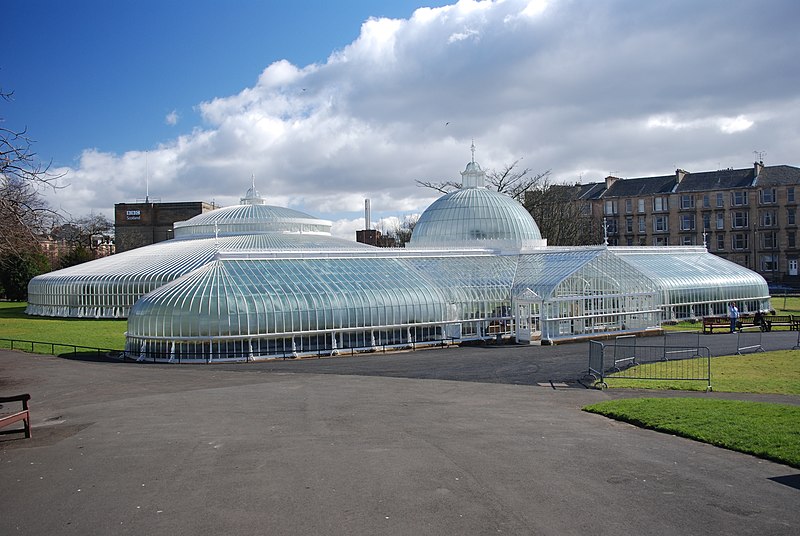
If you’re looking for Glasgow’s bohemian side, then look no further than West End.  Here you’ll find cafes, bars, clubs, restaurants and up market hotels.  You’ll also find the University of Glasgow and the Glasgow Botanic Gardens in the West End as well as the Scottish Exhibition and Conference Centre.

Source:Wikimedia Commons


Hillhead
Hillhead is one of several residential areas of West End.  It is popular with students and academics as it is close to the university and also with writers and media people.

Partick to the west of Hillside was once the residence of the Kings of Strathclyde and the Bishops of Glasgow.  Now you are more likely to meet students from the university on the streets.

East End
In the East End you’ll find ‘The Barras’ aka Glasgow Barrowland Market as well as Celtic Park home to Glasgow Celtic FC.  Originally an industrial area, many of the original tenement buildings still remain as a legacy to these times.  Now the Wellpark Brewery responsible for Tennent’s Lager is still one of the biggest local employers.

Source:Wikimedia Commons


In the East End you’ll also find the Glasgow Necropolis, an old Victorian cemetery, on a hill behind Glasgow Cathedral or High Kirk.  At the cemetery’s peak there is a statue of John Knox a Scottish Protestant reformer.

Source:Wikimedia Commons


South Side
South Side, literally south of the River Clyde is a jigsaw of small residential districts, although it does have some notable public buildings like Charles Rennie Mackintosh’s Street School Museum and House for an Art Lover too.  It is also home to Hampden Park home to Queens Park FC and the Ibrox Stadium where Glasgow Rangers FC play.

The Gorbals
One of South Side’s most infamous suburbs is The Gorbals.  Industrialisation brought people flooding to the cities where there was work and Glasgow was no exception.  The Gorbals area was already overcrowded by the 19th century.

By this time work brought immigrants from Italy and Ireland; later Jews from Eastern Europe and Russia also came.  At one time, the Gorbals housed the biggest population of Jews in Scotland.  As they improved themselves and got educated they moved out of the area.

Others weren’t so fortunate.  The area became termed as ‘slums’ because of the overcrowding and the poverty.  Although the first ‘slums’ were cleared in the 19th century, it was the 1960’s before there was a big push to improve conditions.  Unfortunately the older buildings were replaced with concrete towers which didn’t help.  There is now a clearance and refurbishment programme in place and the Gorbals is losing its poor reputation.

Alan Pinkerton who set up the Pinkerton Detective Agency in the USA came from the Gorbals.

Govan
Located just 2.5 miles south west of Glasgow’s city centre, Govan has a long history back to at least the 5th/6th centuries.  In the 1930’s it became an over-spill district for The Gorbals as slum clearance began in ernest and Govan grew as a working class area retaining some of the Gorbals’ legacy for poverty.  Govan was the centre of the Clyde’s ship building industry.  Now it is home to BAE Systems Surface Ships who were responsible for building the Royal Nay’s HMS Defender in 2009.

Sir Alex Ferguson and Kenny Dalgish both come from the Govan area.

Pollack, Pollackshaws, Pollackshields
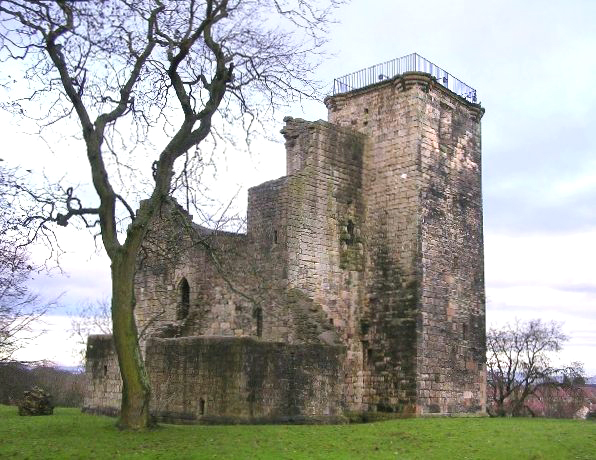
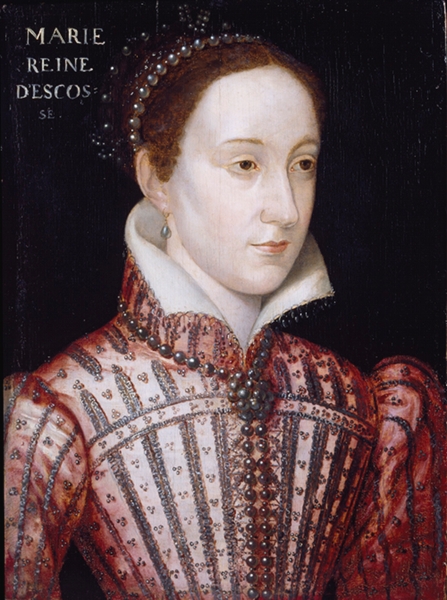
Pollock meaning ‘people who live by a pool’ is a large district with a long history.  In recent times – 1920’s and 1950’s – the area was developed to house 30,000 from Glasgow’s crowded inner city.  It is mainly residential but it’s also where you’ll find Pollock Country Park and Crookston Castel where Mary, Queens of Scots was held.

Source:Wikimedia Commons


Pollockshaws was originally an industrial area and still has many of the typical sandstone tenement blocks.  It is home to both working and middle class families which includes and Asian community.

Comedian Frankie Boyle is famously from here.

Pollockshields is a conservation area developed by the Stirling-Maxwell family in Victorian times.  Many well-known architects had input.  Nowadays it is home to an eclectic and ethnic community.

The late songwriter Eric Woolfson who created The Alan Parsons Project grew up here.

North Glasgow
Here there is a cultural mix with affluent suburbs as well as some of the poorest.  Possilpark and Hamiltonhill fall into the latter category with high levels of unemployment and social problems.

In the more affluent Bearsden, where singer Darius calls home, part of the Roman Antonine Wall runs through the area.  Bearsden has many larger town houses and is a desirable place to live in Glasgow.

Milngavie next door to Bearsden is also a desirable area with most of its population commuting into central Glasgow for work.  It’s a real architectural treasure with a few examples of 19th century stone villas remain as does the railway station which has been well preserved.  Victorian houses have been protected in the Tannock conservation area and in the centre of Milngavie, there are Victorian shop and tenement buildings and just a few Arts & Crafts commercial buildings and large houses influenced by that style.

Castle Comfort Stair Lifts
Which ever part of Glasgow you hail from Castle Comfort Stair Lifts is here to keep you mobile.  We have 15 years in the business and can advise on any angle and you get personal service from us.  We can offer you top brands of stairlifts at competitive prices – we even have our own brand.

“We have a knowledge of the stairlifts industry greater than probably any other supplier in the U.K. Our knowledge and experience allows us, via our authorised partner agreements with large manufacturer and also smaller family stairlift firms, to source the best stairlift for your personal requirements – and get you one installed with the most favourable quotation(s).”

We are very keen to make sure that the 115,000 retired people and other who may have mobility problems get the best and fairest service if they need a stairlift.

One the decisions have been made, it takes less than half a day to install a stairlift in your home.  This means access to all areas, a regained independence and a safer journey up and down those stairs.

If you’ll like more information about prices, grants and 0% finance or anything else about stairlifts, please browse our website or give our Glasgow office a call on  0141 278 3929 .

Thursday, 26 July 2012

Stairlifts Irvine – Ayrshire Stairlifts

 
Click here to find new and reconditioned stairlifts in Irvine, Ayshire 


Castle Comfort Stairlifts offers top brand stairlifts, keen prices and fast installs for all those seeking stairlifts in Irvine, Ayrshire . And all work comes with our no-quibble guarantees and famous customer service satisfaction.
Give us a call today on 0141 278 3929  If however, you are looking for fascinating facts about the area then feel free to read on.


Stairlifts Irvine

Irvine in North Ayrshire is a bit of an enigma.  It’s a ‘new town’, one of the 5 designed after the Second World War to ease housing in Glasgow.  But it has also been around for thousands of years!

The first settlement in Irvine dates back to Stone Age times.  The specific area of Irvine that carries this history is Dreghorn, once just a village now part of Irvine.  In fact, Dreghorn is recognised as the earliest inhabited village in Europe.

Source:Public domain


If you are currently feeling like one of the oldest inhabitants because of restricted mobility, please let Castle Comfort Stair Lifts help.  Although we’ve not been around for thousands of years, our 15 years of experience ensures we know just how to help you regain your independence.

A stairlift is a simple electronic piece of equipment that can be fitted to your staircase in just a couple of hours at the most.  But this simple addition to your home can make your life much easier and safer.

There are several types of stairlifts to fit different staircases and different size people and we have a range of them all.  As agents of all UK manufacturers including our own, we can give you a fair and unbiased quote for the one that suits you best.  We also have reconditioned stairlifts too.

One of these will not only suit your needs but also your purse!  Check out our grant advice and 0% finance options that are both on our blog, if paying outright is a little steep.  For any advice, please give our nearest office a call on  0141 278 3929 .

Dreghorn
Going back to Dreghorn which has been occupied since those early times – that’s the longest continual residence of any place in Britain.  The remains of a 5,500 year old well have been discovered and a prehistoric site confirming its longevity.

There is an unusual parish church here, it is octagonal.  It is often referred to as the ‘Thrup’ny Bit’ after the pre-decimal three penny coin which was also that shape.  The Earl of Eglinton brought the design back from Europe and had the church constructed here in 1780.

It’s most famous resident was John Boyd Dunlop who invented the pneumatic (inflatable) tyre.  He is also one of the founders of the Dunlop Pneumatic Tyre Company.

Source:Public domain


Irvine from ancient time to Irvine New Town
Irvine has many connections with famous names throughout its history:
·         The title Lord of Irvine was inherited by King John I of Scotland around the mid 1300’s
·         Robert the Bruce secured the town and handed it down to his grandson, Robert the Steward who would later become Robert II of Scotland
·         Mary, Queen of Scots stayed at nearby Seagate castle

Source:Public domain


·         It was a favourite place of Robbie Burns; today it has two streets named after him, Burns Street and Burns Crescent.  Irvine has the oldest Burns Club in Scotland too
·         Alfred Nobel of the family who inaugurated the Nobel Prize, visited and built an explosives factory on the opposite bank of the River Irvine
·         The author and spy Daniel Defoe surveyed the harbour and port on one of his missions
·         Napoleon III stayed in Irvine when he was invited to the Edlington Tournament at the castle of the same name
·         William Booth, founder of the Salvation Army, visited Irvine on his famous motor cycle tour of Great Britain
Irvine had held a Royal Charter since the 14th century so wasn’t the usual candidate to become a ‘new town’.  Turning it into the 5th new town following East Kilbride, Glenrothes, Cumbernauld and Livingston, involved a great deal of development especially in the older parts of the town.  Irvine is the only new town on the coast.  One of the most popular changes was the development of the Irvine Beach Park on what was once industrial waste land behind the harbour.

Irvine Harbour
Once a thriving port, Irvine fell into decline in the 19th century.  This is when Glasgow, Greenock and Port Glasgow became bigger trading ports, although a shipyard on the River Irvine remained productive until after the Second World War.  After this time it was mainly involved in fit-outs including those for the Queen Elizabeth II, one of Cunard’s great ocean liners.

The port is now officially ‘closed’ as a commercial port.  It is home to the Scottish Maritime Museum where a number of vessels are on display.  MV Spartan a surviving ‘Clyde Puffer’, a small steam boat, is on display there.

Source:Public domain


You’ll also find the Boyd Tide Marker building in the harbour.  It was built at the beginning of the 20th century by harbourmaster Martin Boyd.  During daylight hours it uses a ball and pulley system to mark the tide’s status.  During the night time, lamps mark the tide level.  The building is Grade B listed.

During World War II the area housed a military watchtower with views all over the Firth of Clyde.  This watchtower had the first sighting of a German Messerschmitt 110, a German bomber, in 1941.  Irvine harbour was a prime target for Hitler because it was still a major boating area and also because ICI’s weapons development sat on the banks of the River Irvine!

Irvine Bay
The harbour and bay area are now being reclaimed and developed as a coastal park.  It will not only encourage people back to the water but also offer walks and trails along the coastal path.  The bay has great sailing waters and there are several golf courses in the area making this a desirable visitor attraction.

Irvine has already completed many of the plans for this development with others in progress or in the plans.

You’ll also find the leisure centre here – the largest in Scotland - and of course the great sandy beach overlooking the Firth of Clyde is a definite attraction.


The rich and famous of Irvine
Irvine is the home of birth for several footballers including Kris Boyd who started his career at Kilmarnock and now plays for Portland Timbers; Rangers player Kirk Broadfoot, Dunfermline Athletics’ Paul Burns, the late George Hamilton and Alex Parker, Steven Naismith and Everton player, former footballer Steve Nicol and Cardiff City player Craig Conway.

The 18th century novelist John Galt was born here and the American author Edgar Allan Poe attended Grammar School here.

Castle Comfort Stairlifts
You don’t have to be rich and famous to benefit from one of our stairlifts.  We know that about 200 of Irvine retired folk have already invested in a stairlift to make everyday living easier.  We know this because we keep count.  You can see our counter which is updated by the minute here.
You too can join the ranks of the Irvine mobile community.  Just give us a call on  0141 278 3929  – we can be there in a flash!